How Do Manufacturing Capacity and Quality Control Affect Custom Gate Projects
 FACEBOOK
 TWITTER
 LINKEDIN
Custom gate projects often fail for reasons that are not visible in the first quotation. A supplier may offer an attractive drawing and competitive price, yet still lack the manufacturing capacity and quality control needed to manage long gate spans, structural loads, automation systems, surface treatment, safety devices, and international delivery.
For B2B buyers, manufacturing capacity and quality control directly affect whether a gate fits the opening, operates smoothly, arrives on schedule, and performs reliably after installation. The right supplier must control the complete process rather than simply assemble purchased components.
Why Do Manufacturing Capacity and Quality Control Matter in Custom Gate Projects
A custom gate is a moving structural system. Its frame, support mechanism, drive unit, control board, sensors, foundation, and access devices must work together under repeated operating cycles.
A small dimensional error may cause the gate to lean, shake, drag, or stop before reaching its limit position. Poor material selection may lead to frame deformation. Weak coating control may result in early fading or corrosion. Incorrect safety-device configuration may create operational risks.
Manufacturing capacity prevents many of these problems before production begins. Quality control detects remaining deviations before the gate reaches the installation site.
Manufacturing Capacity Determines What Can Actually Be Customized
Many suppliers use the word “custom,” but their actual capability may be limited to changing the color or gate height. A project-ready manufacturer should be able to adjust:
- Opening width and overall gate length
- Gate height and infill style
- Structural profile dimensions
- Motor and transmission configuration
- Wind-load reinforcement
- Safety sensor arrangement
- Access control interfaces
- Packaging and installation requirements
The manufacturer must also determine when a requested design is technically unsuitable. A very long or high gate may require a larger beam, additional bracing, a stronger foundation, or a different drive system. Accepting every requested dimension without structural review is not a sign of flexibility. It is a project risk.
Quality Control Protects Repeatability
One good prototype does not prove that ten, fifty, or one hundred gates will perform consistently. Repeatability depends on controlled drawings, verified materials, accurate machining, standardized assembly, and recorded inspection points.
For multi-site projects, dimensional consistency is especially important. Replacement parts, installation tools, electrical connections, and maintenance procedures should remain compatible across the full order.
What Should Buyers Check Before Choosing a Custom Gate Manufacturer
A factory tour is useful, but buyers should look beyond the size of the workshop. The more important question is whether the facility, engineering team, and inspection process match the complexity of the project.
Does the Supplier Have In-House Engineering Support
Ask who prepares the technical drawing, electrical diagram, foundation plan, bill of materials, and installation instructions.
An engineering-capable supplier should review the opening width, available side space, vehicle flow, ground condition, wind environment, power supply, and required access method before confirming the design. The approved information should then be converted into controlled production documents.
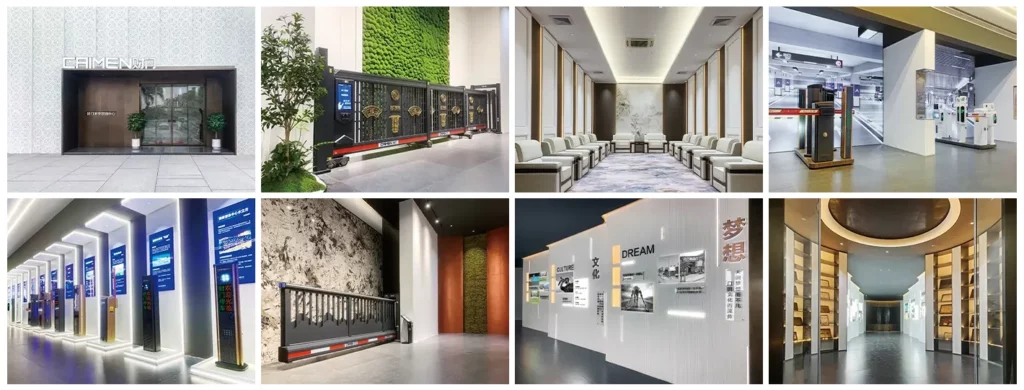
CAIMEN states that its service process can include design renderings, CAD drawings, customer approval, production planning, manufacturing, and shipment. Its internal knowledge materials also describe a 20,000-square-meter production base and dedicated hardware and software engineering resources.
Can the Factory Control Critical Components
Buyers should identify which processes are performed internally and which are outsourced. Important areas include:
- Aluminum or steel profile processing
- Cutting and drilling
- Welding or mechanical joining
- Precision machining
- Surface preparation and coating
- Electrical cabinet assembly
- Software and controller configuration
- Final system testing
Outsourcing is not automatically a problem. The risk appears when the gate supplier cannot trace materials, verify tolerances, or manage subcontractor quality.
Are Inspection Standards Defined Before Production
The purchase specification should state what will be checked and how acceptance will be decided. “High quality” is not a measurable requirement.
A practical inspection plan may include profile grade, wall thickness, overall dimensions, opening direction, motor rating, control voltage, coating appearance, safety functions, manual release, operating noise, limit positions, and accessory quantities.
How Does Manufacturing Capacity Improve Custom Gate Performance
Strong production capacity does more than increase output. It allows the manufacturer to match the structure and automation system to the actual application.
Structural Profiles Must Match the Gate Span
Long-span gates place high loads on the bottom beam, support frame, rollers, joints, and foundation. Profile dimensions and internal reinforcement should therefore be selected according to gate length, height, infill weight, and local wind conditions.
For example, CAIMEN’s technical documentation for its cantilever gate lists 6005-T6 aluminum for major beam sections and 6063-series aluminum for supporting profiles. It specifies a bottom beam section of approximately 302 × 213 mm, with critical wall thickness reaching up to 7 mm in certain areas. Custom engineering information also lists configurations reaching a total length of up to 28 meters and a height of up to 4 meters, subject to project design.
These figures should not be copied into every project specification. They show why buyers need a manufacturer that can select profiles according to structural demand rather than use one frame for every opening.
Precision Assembly Reduces Sagging and Shaking
A custom gate may have correctly sized profiles but still operate poorly if the support points, guide wheels, tension rods, columns, and limit devices are misaligned.
Precision machining and assembly help keep the gate moving in a straight line. For cantilever systems, the relationship between the supporting beam, guide wheels, counterbalance section, and receiving post is critical. Misalignment increases motor load and accelerates component wear.
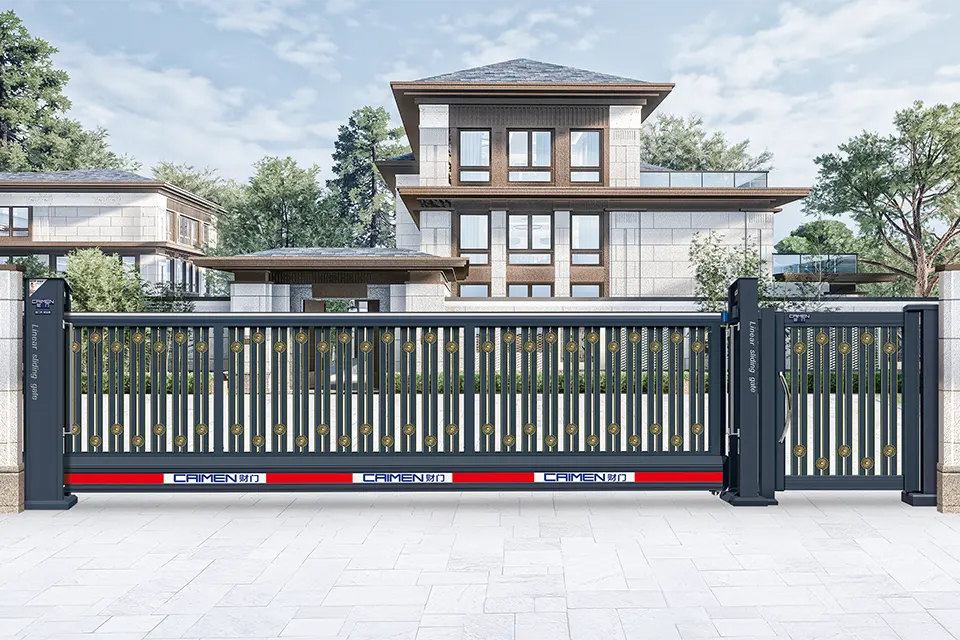
The selected Cantilever Sliding Gate uses a trackless structure and is designed for locations where water, mud, sand, snow, or uneven ground could make a conventional ground track difficult to maintain. The product can also integrate remote control, license plate recognition, mobile control, Bluetooth, and other access methods.
Integrated Production Improves System Compatibility
The gate body, motor, controller, sensors, and access devices should be selected as one system. A powerful motor does not compensate for poor frame alignment. A strong gate body does not provide safe operation without correctly positioned sensors.
Integrated engineering helps match motor torque, operating speed, gate weight, opening frequency, control logic, and safety response. It also reduces problems caused by incompatible third-party accessories.
How Should Quality Control Be Built into a Custom Gate Project
Quality control should begin before raw materials enter production and continue until the system is packed.
Incoming Material Verification
The factory should verify material grade, profile dimensions, wall thickness, hardware specifications, electrical components, and coating materials against the approved bill of materials.
For aluminum gates, profile grade and temper affect rigidity and load capacity. For fasteners, rollers, bearings, and mechanical joints, material quality affects wear resistance and long-term alignment.
In-Process Dimensional Inspection
Important dimensions should be checked after cutting, machining, frame assembly, and final system installation. Waiting until the completed gate is tested may make corrections expensive.
Inspection points can include:
- Overall gate length and height
- Diagonal measurements
- Beam straightness
- Hole and bracket positions
- Column alignment
- Roller clearance
- Counterbalance length
- Sensor mounting position
Surface Treatment Inspection
Outdoor gates are exposed to ultraviolet radiation, rain, humidity, dust, temperature changes, and sometimes salt-laden air. Buyers should check the surface preparation method, coating type, curing process, film uniformity, color consistency, and repair procedure.
CAIMEN’s cantilever documentation describes a dual-curing powder-coating process and references testing for ultraviolet and corrosion resistance. The product information also presents a configurable operating range intended for varied climates.
Functional and Safety Testing
Before shipment, the complete gate should be operated repeatedly. Testing should confirm:
- Smooth opening and closing
- Correct limit positions
- Soft start and soft stop
- Emergency stop response
- Manual release operation
- Motor protection
- Remote-control function
- Infrared sensor response
- Anti-collision reversal
- Anti-pinch protection
The cantilever system documentation includes pressure-sensitive safety edges, infrared sensing, mechanical anti-pinch protection, and emergency stop functions. Its installation manual also requires proper grounding, an independent switch, and a 6A circuit breaker.
Which Supplier Type Is Better for Your Project
| Supplier Type | Better for | Main Limitation |
| Standard catalog supplier | Small openings with common dimensions | Limited structural and control customization |
| Assembly-focused supplier | Price-sensitive projects with simple requirements | May depend heavily on external engineering and components |
| Engineering manufacturer | Large spans, high operating frequency, difficult sites, and integrated access control | Requires more detailed project information before quotation |
The lowest initial quotation may be suitable for a simple, low-frequency entrance. For a logistics center, factory, public facility, or multi-site project, stronger engineering and inspection capability usually provides better lifecycle value.
How Can Buyers Reduce Risk Before Placing an Order
Send the supplier complete site information rather than requesting a price based only on opening width.
Your request should include:
- Clear opening width and required gate height
- Available side space
- Ground level and drainage condition
- Wind and local climate information
- Daily and peak operating frequency
- Vehicle type and traffic flow
- Power supply
- Required access control method
- Safety requirements
- Preferred finish and color
- Delivery destination and installation responsibility
Then request an approved drawing, configuration list, foundation plan, electrical diagram, production schedule, inspection scope, packing method, and installation manual.
Reviewing a supplier’s product range, company capabilities, and completed projects can also show whether its experience matches your site. CAIMEN’s published portfolio includes villa, commercial, government, stadium, university, parking, and cantilever gate applications.
FAQ
How Long Does a Custom Gate Usually Take to Produce
Lead time depends on drawing approval, gate dimensions, material availability, coating, automation configuration, and order quantity. CAIMEN’s internal workflow indicates that production may take about 20 days after the design is approved, although complex projects and large orders may require more time.
Which Gate Is Better for Uneven or Snow-Covered Ground
A trackless cantilever gate is often the better option because it does not rely on a ground rail across the vehicle opening. However, the support foundation, cabinet, gantry, and guide components must still be installed at the required level.
What Documents Should Be Supplied for Installation
At minimum, request a layout drawing, foundation dimensions, wiring diagram, component list, commissioning procedure, safety instructions, troubleshooting guide, and maintenance schedule. Installers should also receive instructions for manual operation during a power failure.
Can a Custom Gate Connect to an Existing Access Control System
It often can, but compatibility must be confirmed before production. Share the signal type, communication protocol, voltage, device model, and required operating logic with the manufacturer. License plate recognition, remote controls, sensors, mobile applications, and building access platforms may require different interfaces.
How Do Manufacturing Capacity and Quality Control Affect Maintenance Costs
Accurate structural production reduces misalignment, vibration, and abnormal motor load. Controlled materials and coatings slow deterioration, while documented electrical and safety configurations make troubleshooting and spare-part replacement easier. These factors can reduce unplanned maintenance throughout the gate’s service life.
Conclusion
Manufacturing capacity defines whether a custom gate design is practical, repeatable, and suitable for the site. Quality control confirms that the approved design has been produced correctly.
Before buying, compare suppliers through engineering capability, material traceability, production control, system testing, installation support, and relevant project experience. When the entrance involves a long span, difficult ground, frequent operation, or integrated access control, reviewing the complete solution is more valuable than comparing gate prices alone.
Buyers with a defined opening size and application can review CAIMEN’s project examples or use the contact page to submit site dimensions, traffic requirements, safety functions, and access-control needs for technical evaluation.