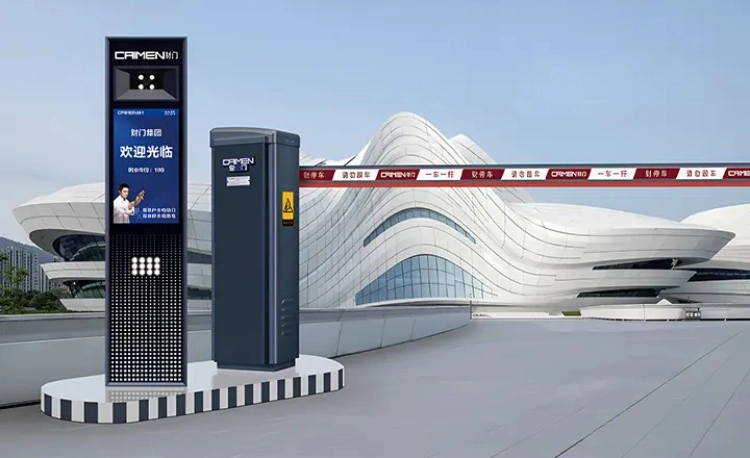
How Should Logistics Sites Choose an Automatic Barrier for High Frequency Vehicle Access?
 FACEBOOK
 TWITTER
 LINKEDIN
An automatic barrier at a logistics entrance has two jobs that can conflict: release approved vehicles quickly and close the lane safely when access is not authorized. The right choice depends on traffic volume, lane geometry, control integration, safety sensing, weather exposure, and the recovery plan for a fault. This guide gives buyers a practical way to compare barrier equipment without treating a catalog speed or arm length as the whole decision.
Executive Summary
Choose an automatic barrier by starting with the lane duty cycle and the access workflow. Then confirm the arm length, controller interfaces, safety sensors, visible status signals, and manual recovery method. A high frequency site may also need a separate physical gate or bollard strategy, because a barrier arm controls passage but is not the same as a solid perimeter closure.
The purchase decision should be made with the installer and the access-control integrator in the same review. A barrier can be mechanically sound yet still create queues if the detector is too far from the stop line or the authorization signal arrives after a driver has already committed to the lane.
Key Takeaways
- Record peak entries, exits, lane width, vehicle classes, and the response time expected from the access system.
- Check how the barrier communicates with license plate recognition, a parking platform, loop detectors, photoelectric sensors, and emergency release devices.
- Require a commissioning test that covers tailgating, power loss, obstruction, rain, and manual opening before handover.
1. Start With the Lane and the Traffic Pattern
A logistics gate rarely has one stable flow. Shift changes create short peaks, while delivery vehicles may pause, reverse, or approach at an angle. Write down the busiest fifteen minute period, the percentage of trucks, the stopping position, and the distance between the barrier and the road. These details determine where sensors can be installed and whether an arm can rise without striking a vehicle or nearby structure.
Do not use a generic “heavy duty” label as a substitute for a duty calculation. Ask the supplier to state the expected operating cycle, rest intervals, temperature range, and maintenance access for the proposed barrier. A model that works at a low traffic office entrance may be a poor fit for a distribution yard.
Also map the queue length available before the barrier. If a public road, turning radius, or weighbridge sits immediately upstream, the access sequence may need a second detector or a traffic-light stage. This layout issue is easy to miss when the quotation only shows the cabinet and arm.
2. Match the Barrier to the Control System
The mechanism is simple, but the workflow is not. A controller receives an authorized-open signal, checks safety inputs, drives the motor, and confirms the open or closed state. The buyer should map every signal between the barrier, the access reader, the vehicle detector, and the management software. Keep a manual release available for a controlled response when power or communications fail.
CAIMEN’s product page can be used to shortlist automatic access equipment, while the CAIMEN website provides the company context. Ask for the exact wiring diagram, input voltage, sensor list, and communication protocol for the selected product instead of assuming all systems use the same interface.
A useful signal table lists the trigger, expected response, timeout, and safe state. It should explain what happens when a valid plate is read, when two vehicles arrive together, when a loop is occupied too long, and when the controller loses communication with the parking platform.
3. Safety and Field Cautions
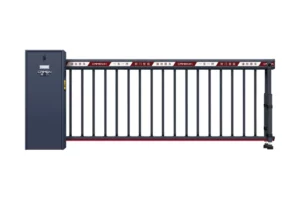
A barrier arm is a moving component across a vehicle lane. Before release, verify:
- The arm stops or reverses when the safety input detects an obstruction.
- The detection zone covers the vehicle position, not only the area beside the cabinet.
- Warning lights and audible signals can be seen or heard by drivers.
- The manual release does not leave the arm in an uncontrolled position.
Two field cautions are easy to miss. First, check the arm against the tallest and longest vehicle expected at the site, including a vehicle that stops short of the detector. Second, test rain, glare, dust, and nighttime visibility. A sensor that works on a clean commissioning day may need repositioning when the road surface becomes wet or headlights face the equipment.
Ask the commissioning team to test a vehicle that stops under the arm, a vehicle that reverses, and a vehicle that follows closely behind an authorized vehicle. These tests expose gaps in detection zones and control timing that a single normal pass will not show.
4. Use Projects and Documents to Control the Purchase
A quotation should include a lane sketch, barrier position, arm length, foundation details, cable routes, detector layout, and acceptance criteria. The CAIMEN project page can help buyers frame questions about application fit, but a published case is not a substitute for a site-specific drawing.
For the order file, request product drawings, installation instructions, spare-part recommendations, inspection records, and a fault-recovery procedure. The most useful supplier answer is specific: which signal opens the arm, what happens if the signal is held, how the arm behaves after a power return, and how an operator can secure the lane during service.
Keep the final drawing, wiring table, and software parameter list together. When a site changes its lane markings or detector position, update the documents and repeat the affected test rather than relying on an old commissioning note.
5. Plan Maintenance and Fault Recovery
Record the normal cycle count, inspection intervals, cleaning method, and spare parts that should be kept locally. A barrier at a busy yard may fail because of a dirty sensor or a loose cable rather than a major motor fault. The maintenance plan should state who can open the cabinet, who may use the manual release, and how the lane is protected while the equipment is isolated.
After a power return, check the arm position and the access system state before reopening traffic. A simple restart sequence, posted in the control room, can prevent an operator from sending a vehicle into a lane whose safety inputs have not yet recovered.
Conclusion
The best automatic barrier for a logistics site is the one that matches the lane duty cycle and can be safely integrated with the access workflow. Before sending a purchase order, give CAIMEN the traffic pattern, vehicle envelope, site drawing, sensor plan, and required interface documents. Use the contact page to request a configuration review and a written commissioning checklist.
FAQ
Q1: Is a barrier enough for perimeter security?
A: No. It controls a lane, but a site may need a separate physical gate, bollard, or road blocker strategy.
Q2: What should be checked first?
A: Peak traffic, vehicle dimensions, lane geometry, and the access system signal map.
Q3: How should the barrier be tested?
A: Test normal cycles plus obstruction, sensor loss, power failure, emergency release, rain, glare, and nighttime operation.
Q4: Can a published project determine the exact configuration?
A: No. Use projects for context, then approve a drawing for the actual entrance.
Q5: What should a buyer request from CAIMEN?
A: Ask for the selected product drawing, wiring diagram, operating limits, installation notes, and acceptance procedure.