Aluminum Driveway Gates vs Steel: Weight, Structure, and Operator Selection
 ФЕЙСБУК
 Твіттер
 Лінкедин
Aluminum driveway gates can reduce moving weight, but the material name alone does not tell you whether a gate will remain aligned or suit a particular operator. Steel is also a viable choice when its finished weight, structure and protective finish fit the project. For a useful comparison, ask both suppliers to quote the same opening, height, infill design and operating requirements.
For installers, architects and property buyers, the decision comes down to the complete assembly. Compare the mass of each finished leaf, the frame and its connections, then the operator selected for that exact arrangement. A low weight on the quotation is helpful only if the proposed gate also meets the structural and operating requirements.
Compare aluminum driveway gates and steel on the same basis
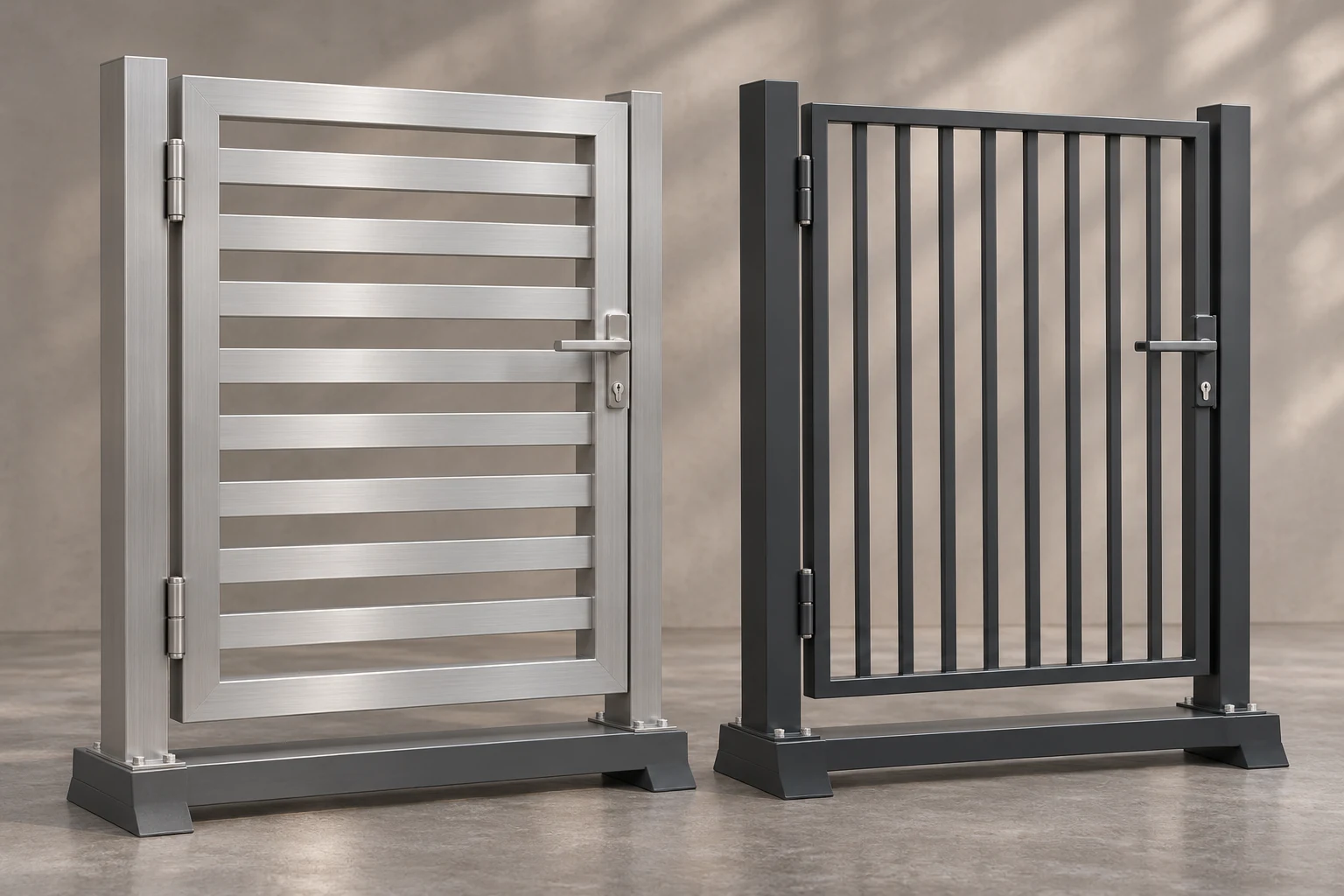
In this comparison, steel means conventional structural steel with a specified outdoor protective finish. Stainless steel is a separate specification. Aluminum means a fabricated gate using aluminum alloy members; its hinges, fasteners and other fittings may use different materials.
| Decision point | Aluminum gate proposal | Steel gate proposal |
| Finished mass | Request the mass of the complete leaf, including infill and fittings. | Request the same total, rather than a frame-only estimate. |
| Frame design | Check profile shape, wall thickness, reinforcement and joints. | Check section sizes, reinforcement and joints. |
| Outdoor finish | Specify the finish for the exposure and the care it needs. | Specify the corrosion protection and repair method for damaged areas. |
| Автоматизація | Verify leaf dimensions, mass and use against the selected operator. | Apply the same checks; material alone does not select the motor. |
| Quoted scope | Include posts, hardware, controls, safety provisions and installation. | Compare an equivalent scope before judging the price. |
Start with a layout that suits the entrance. CAIMEN’s рішення для житлових воріт include different opening arrangements, so the material decision can follow the practical requirements of the site.
Ask for finished leaf weight rather than a material ratio
У Aluminum Extruders Council’s material comparison puts aluminum’s density at about one-third that of steel. That is a comparison of material volume. It does not mean an aluminum gate built for the same opening will weigh exactly one-third as much as a steel alternative.
A gate’s profile dimensions, internal walls, infill and reinforcement all affect its finished mass. A privacy panel adds material that an open-bar design does not have. Hinges, locks and decorative components add more. Comparing a bare aluminum frame with a fully fitted steel leaf tells you little about the installed alternatives.
Ask the supplier to identify what the stated weight includes and whether it is a design estimate or a measured production value. For double gates, obtain the weight of each leaf. Also separate moving mass from delivery weight: packaging, fixed posts and a control cabinet do not all travel with the gate.
If the final design changes, update the weight used for automation selection. Adding panels after the original quotation can change both moving mass and exposure to wind. The original motor choice should be reviewed against the revised drawing.
Check the frame before choosing the finish
Two gates can share the same outside dimensions and look similar in a rendering while using very different members and connections. Ask for a section drawing showing the main frame, infill attachments and the points where hinges or drive brackets connect. The question is whether the complete design suits the opening and loads, not whether one material sounds stronger in a brochure.
For an aluminum proposal, check the specified alloy and temper alongside the profile shape. For a steel proposal, ask for the steel grade and section details. In either case, the supplier should explain the reinforcement and connection design. A wall thickness copied from another gate model is not a substitute for that information.
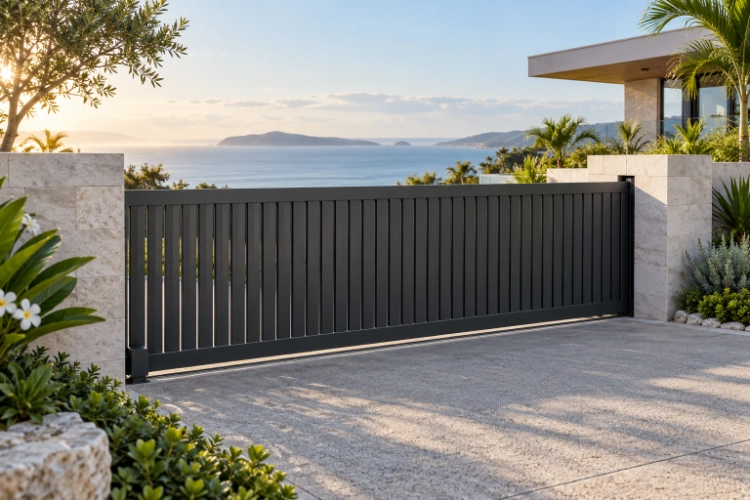
КАЙМЕН aluminum electric swing gates can be configured with different leaf arrangements, dimensions and infill styles. Confirm the structural specification for the version being quoted. A slatted entrance and a fully closed privacy gate should not be treated as identical simply because their overall width is the same.
Keep appearance approval and engineering approval connected. If a designer changes the infill, frame proportions or decorative features, make sure the revised drawing reaches the person selecting the hardware and operator before production starts.
Match the operator to the gate and its use
A headline weight rating is only part of operator selection. Check the manufacturer’s applicable limits together, including leaf length, mass, mounting arrangement and operating frequency. The maximum length and maximum weight in a product summary should not be assumed to apply simultaneously unless the manufacturer’s selection information confirms that combination.
For swing gates, provide the length of each leaf and the proposed hinge and actuator mounting positions. Confirm the opening angle and available space with the installer. A lighter leaf does not remove the need to check geometry, particularly when replacing an existing gate while keeping old posts or motor brackets.
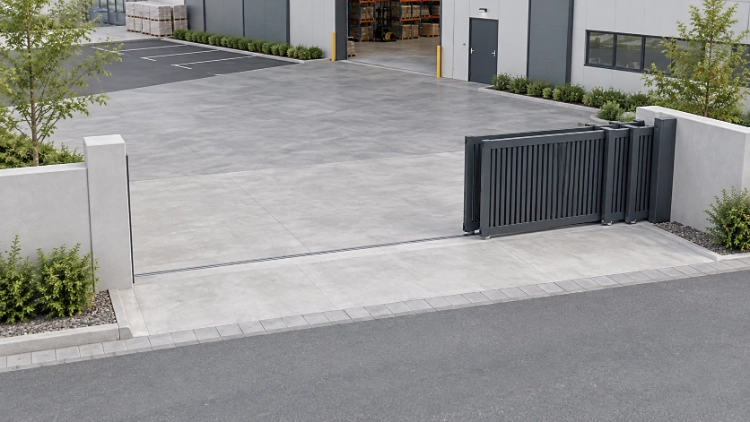
For sliding gates, the quotation should identify the supporting and guiding arrangement as well as the drive. CAIMEN’s автоматичні алюмінієві розсувні ворота offers a sideways opening option. Ask how the finished leaf, its support components and the selected operator will work together; changing the frame material does not resolve a poorly aligned installation.
Describe traffic in terms the supplier can use. Give the expected daily movements and the busiest period, rather than calling the entrance “residential” and leaving the duty requirement unstated. A shared entrance may have concentrated use that a private driveway does not. Ask the supplier to define a cycle and state any operating limits or rest requirements for the proposed equipment.
Wind also needs its own check. The UK’s Health and Safety Executive explains in its powered gate safety guidance that wind loads affect mountings and actuators, with closed-boarded hinged gates presenting particular challenges. Low moving weight is therefore not a reason to omit the assessment of a large solid infill. This is a design consideration; the installer must establish the requirements applicable to the project location.
Do not solve difficult movement by simply specifying a larger motor. Have the installer assess the mechanical condition and the complete safety arrangement. Protective devices, controls and the gate’s response need to work together. Neither steel nor aluminum makes those checks optional.
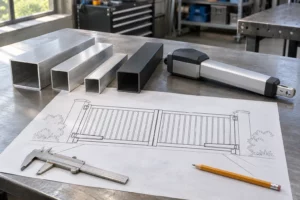
Concept illustration of design information and components used in specification review, not a CAIMEN test or approved installation drawing.
Compare the installed scope before comparing prices
A useful price comparison starts with two complete proposals. List the gate leaves, posts, hinges or support assemblies, operator, controls, protective devices, electrical work and foundations. Identify which items are supplied, which are installed and which remain the buyer’s responsibility. Otherwise, the lower figure may simply exclude more work.
Keep maintenance expectations specific. Ask how to inspect and repair the protective finish on steel driveway gates, and what cleaning and inspection the aluminum option requires. Neither proposal should rely on the word “maintenance-free.” The operating hardware and safety functions still need attention, even if the gate surface is in good condition.
For a replacement project, include inspection of the existing supports and automation in the quotation. Reusing them may be possible, but compatibility should be confirmed against the new leaf design. Do not count those savings before the checks are complete.
What to send with a request for quotation
Give each supplier the same brief so that the replies can be compared without guessing what has changed.
- Opening width and required height, with a site sketch and photographs.
- Swing or sliding arrangement, number of leaves and desired infill style.
- Existing posts and foundations, ground conditions and known site exposure.
- Expected daily movements, peak use and required opening behaviour.
- Power supply, access controls, pedestrian arrangements and installation responsibilities.
Ask the reply to identify the proposed materials, finished leaf mass, structural details and operator model. It should also state assumptions and exclusions. That makes a later design change visible instead of leaving it hidden in a revised price.
Часті запитання
Are aluminum driveway gates always lighter than steel gates?
Aluminum has lower material density, but finished gate weight depends on the design. A large solid aluminum leaf and a smaller open steel leaf are not equivalent comparisons. Request the complete moving weight for matching dimensions and infill, including the fittings that will be installed on each leaf.
Does a lighter gate need a smaller motor?
Possibly, but weight alone cannot establish that. Leaf length, mounting geometry, wind exposure and operating demand still matter. Have the supplier check the complete application against the selected operator’s limits. Do not reduce the motor specification solely because the new gate uses aluminum.
Which material gives better security?
The material label does not establish a security rating. Define the required protection, then assess the complete gate, supports, locking arrangement and access controls. If a tested resistance level is required, request evidence for the specified assembly rather than treating extra weight or a stronger-sounding alloy as proof.
Choose the complete entrance specification
Aluminum driveway gates are worth considering when reducing moving mass is a project priority. Steel remains an option when its structure, protection and finished weight suit the installation. Choose between actual proposals with matching requirements, then confirm the operator and support design for the selected gate.
To discuss a CAIMEN aluminum gate, send your entrance dimensions and project requirements. Include the desired infill and expected use so the gate structure and automation can be considered together.