Was Sie vor der Installation und Wartung eines freitragenden Schiebetors überprüfen sollten
 Auf Facebook
 Twitter
 LINKEDIN
Ein verlängertes Schiebetor kann die Wartezeit an Einfahrten nur dann verkürzen, wenn Fundament, Tragkonstruktion, Energieübertragung und Sicherheitseinrichtungen als ein komplettes System geplant und ausgelegt sind. Für große Fabriken, Lagerhallen, öffentliche Einrichtungen und Hochsicherheitsbereiche stellt sich die Frage: Welches System wird auch nach jahrelangem Dauereinsatz bei Regen, Schmutz, hohem Fahrzeugaufkommen, Wind und in Notfällen noch funktionieren?
Für Käufer von Industrietoren, CAIMEN ist einen Blick wert, da das Unternehmen Torbau, intelligente Steuerung, kundenspezifische Entwicklung, Projektanpassung und Qualitätskontrolle für Zugangssysteme vereint.
Zusammenfassung
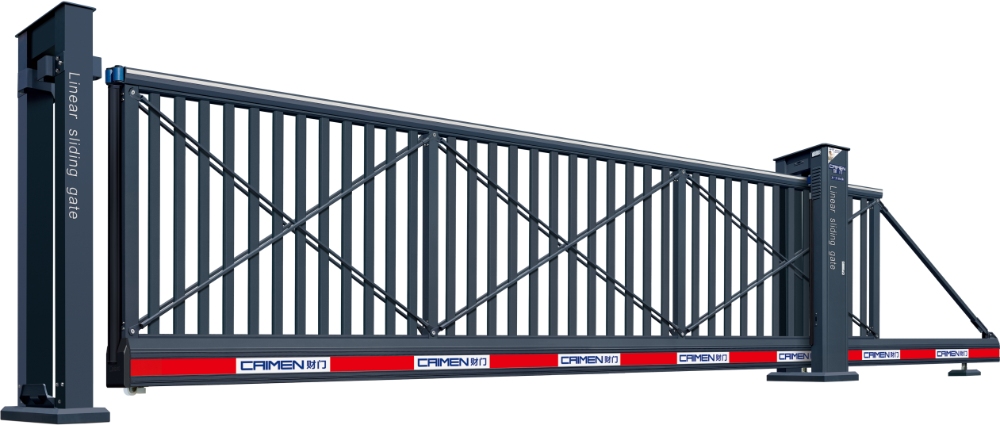
Ein zuverlässiges freitragendes Schiebetor benötigt die richtige Standortwahl, eine stabile Betonkonstruktion, präzise Nivellierung, geschützte Verkabelung und geprüfte Sicherheitssensorik. Die schienenlose Aufhängung vermeidet Bodenschienen, an denen sich Schnee, Schlamm, Sand oder Schmutz ansammeln können, und eignet sich daher besonders für unebene Flächen, stark frequentierte Bereiche, Küstenstandorte und Gebiete mit hohem Lkw-Verkehr.
Zu den wichtigsten Installationskontrollmaßnahmen gehören eine Nivellierungstoleranz von ±10 mm für den Schrank, den Portalrahmen und die Hängerollen; eine 800 x 800 x 800 mm große Bodengrube, die mit mindestens C20-Beton gefüllt ist; Stromunterbrechung während der Arbeiten; ein unabhängiger Schalter mit einem 6-A-Leistungsschalter; und eine ordnungsgemäße Erdung vor der Inbetriebnahme.
| Checkpoint | Erfordernis |
| Basisgrube | 800 x 800 x 800 mm, Beton der Festigkeitsklasse C20 oder höher |
| Niveauregelung | Schrank, Portalrahmen und Hängerollen innerhalb von ±10 mm |
| Elektrischer Schutz | Unabhängiger Schalter, 6-A-Leistungsschalter, ordnungsgemäße Erdung |
| Sicherheitstest | Infrarotsensorik, Einklemmschutz, Sicherheitskante, Not-Aus, manuelle Auslösung |
Problemstellung / Auswahllogik: Worauf sollten Käufer vor der Auswahl eines freitragenden Schiebetors achten?
Die meisten Ausfallzeiten entstehen durch ein schwaches Fundament, eine instabile Torbalance, ungeschützte Verkabelung oder falsch ausgerichtete Sicherheitseinrichtungen. Torkonstruktion, Motorleistung, Windlast, Sicherheitssystem, Zugangskontrolle und Wartungszugang müssen an die Gegebenheiten vor Ort angepasst werden.
Wann sollte man sich für ein schienenloses Kragarmsystem entscheiden?
Entscheiden Sie sich für ein freitragendes Schiebetor ohne Bodenschiene, wenn der Eingangsbereich mit Wasser, Schlamm, Sand, Eis, Schnee oder unebenem Untergrund zu tun hat. Da der Torflügel freischwebend ist, entfällt die Reinigung und Ausrichtung einer Bodenschiene. Es eignet sich auch für Einfahrten ohne Schwenkbereich vorne oder hinten, da sich der Flügel parallel zur Zaunlinie bewegt.
Was Sie vor dem Kauf prüfen sollten
Prüfen Sie die Durchgangsbreite, die Gesamtlänge des Tores, die Höhe, die örtliche Windstärke, die Stromversorgung, die Steuerungsmethode und die Sicherheitsvorrichtungen. Die Spezifikationen des CAIMEN-Freitragenden Tores umfassen einen unteren Träger aus Aluminium 6005-T6 (302 x 213 mm, bis zu 7,0 mm Wandstärke), einen oberen Träger aus Aluminium 6005-T6, vertikale Stäbe aus Aluminium 6063-T5, eine Gesamtlänge von bis zu 28 m und eine Höhe von bis zu 4,0 m. Der Antrieb CMXF-735 bietet Schutzart IP54, eine Nennleistung von 550 W, eine Netzspannung von 220 V/50 Hz und einen Betriebstemperaturbereich von -20 °C bis +60 °C.
Wie man ein freitragendes Schiebetor mit weniger Inbetriebnahmeproblemen installiert
Die Installation sollte gemäß der Bedienungsanleitung des Herstellers und den örtlichen Sicherheitsvorschriften erfolgen. Ein freitragendes Tor vermeidet viele Probleme mit Bodenschienen, erfordert aber dennoch eine präzise Positionierung des Schranks, eine stabile Verankerung, die korrekte Ausrichtung der Führungsrollen und einen sicheren elektrischen Schutz.
Geländeanpassung und Betonfundament
Schaffen Sie eine last- und vibrationsfeste Basis. Zementuntergründe müssen eben sein, Unebenheiten mit selbstnivellierendem Zement aufgefüllt werden. Fliesen- oder Steinoberflächen benötigen ebene Fugen. Bei Außenanlagen muss eine Entwässerung gewährleistet sein, die Arbeitsfläche jedoch eben bleiben. Weiche Bodenbeläge sind nur geeignet, wenn sie verstärkt sind.
Das Gehäuse, der Portalrahmen und die Hängerollen müssen innerhalb einer Toleranz von ±10 mm auf einer ebenen Fläche stehen. Die Baugrube sollte 800 x 800 x 800 mm groß sein und mit Beton der Festigkeitsklasse C20 oder höher verfüllt werden. Verwenden Sie vor der Montage des Gehäuses und der Einbauteile eine Wasserwaage, da viele Geräusche, Durchbiegungen und Endlagenfehler auf ein unzureichendes Fundament zurückzuführen sind.
Strukturmontage und Bewegungspfad
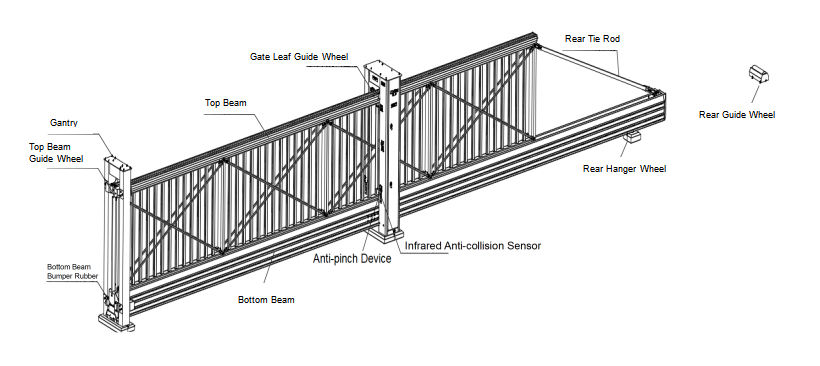
Ein typisches System umfasst den Motorschrank, das Torblatt, den Portalrahmen, das hintere Führungsrad, die oberen und unteren Träger, die Spannstangen, die Verstrebungsstangen, die Infrarotsensoren, die Einklemmschutzleisten, den Empfänger, das Steuerungssystem, die Aufhängevorrichtung und die manuellen Auslöseteile. Bewegen Sie das Tor nach der Montage mehrmals manuell. Treten dabei Schleif- oder Stoßgeräusche auf, justieren Sie das Führungssystem vor der elektrischen Prüfung.
Elektrische Sicherheits- und Steuerungseinrichtung
Vor Installation, Inspektion oder Wartung die Stromzufuhr unterbrechen. Einen separaten Schalter und einen 6-A-Leistungsschalter verwenden und vor Inbetriebnahme die Erdung prüfen. Kinder und Unbefugte während der Inbetriebnahme fernhalten. Der Installateur sollte den Benutzer in der manuellen Bedienung bei Stromausfällen schulen.
Überprüfen Sie während der Inbetriebnahme die Signale von Fernbedienung, Drucktaster, Magnet- oder Radarsensoren sowie intelligenten Systemen wie der Kennzeichenerkennung. Der Antrieb kann über einen Zahnriemen, ein Zahnstangengetriebe oder einen berührungslosen Linearmotor erfolgen. Sanftes Beschleunigen, gleichmäßiger Lauf und gleichmäßige Verzögerung reduzieren Vibrationen und verlängern die Lebensdauer.
Wie verbessert das System die Leistung im täglichen Betrieb?
Ein gut konstruiertes Kragarmtor minimiert Ausfallzeiten durch die Kombination von mechanischer Stabilität und aktiver Sensorik. Infrarotsensoren scannen den Bewegungspfad und stoppen oder drehen das Tor um, sobald ein Hindernis auftaucht. Kontaktgesteuerte Antikollisionsvorrichtungen lösen die Umkehr- oder Stoppfunktion aus. Mechanische Einklemmschutzleisten reduzieren das Risiko des Verhedderns, und ein Not-Aus-Schalter ermöglicht die sofortige Stromabschaltung.
Für stark frequentierte Anlagen ist ein gemischtes Managementkonzept oft besser geeignet. Während der Stoßzeiten kann das freitragende Tor geöffnet bleiben, während Kennzeichenerkennung und eine Hochgeschwindigkeitsschranke den Fahrzeugfluss regeln. Nachts schließt das freitragende Tor als primäre physische Perimeterbarriere. Käufer können die entsprechenden Zutrittskontrollkombinationen auf der CAIMEN-Produktseite einsehen. CAIMEN-Produktseite.
Wie man ein freitragendes Schiebetor ohne häufige Ausfallzeiten instand hält
Die Wartung sollte sich auf die Bewegungsbalance, Befestigungselemente, Sicherheitseinrichtungen, den elektrischen Schutz und den Oberflächenzustand konzentrieren. Verwenden Sie nach Möglichkeit Originalersatzteile und demontieren Sie keine versiegelten Leistungskomponenten ohne Genehmigung. Nicht autorisierte Reparaturen können aus einer kleinen Störung einen längeren Ausfall verursachen.
Routinemäßige mechanische Überprüfungen
Prüfen Sie die Aufhängerollen, Führungsrollen, die hintere Diagonalstrebe, den unteren Trägerverbinder und die Befestigungsschrauben. Wenn das vordere Ende beim Öffnen um 1 bis 5 cm durchhängt, justieren Sie die hintere Diagonalstrebe. Bei einem Durchhänger von 5 bis 10 cm justieren Sie die hintere Aufhängerolle. Bewegen Sie das Tor nach der Justierung mehrmals von Hand und achten Sie dabei auf Schleifgeräusche, Stöße oder ungleichmäßigen Widerstand.
Sensor- und Umgebungsprüfungen
Prüfen Sie die Sicherheitsleiste mit Druckwellensensor, den Infrarot-Lichtschrankensensor, den Übersteigalarm, die mechanische Einklemmsicherung, den Not-Aus-Schalter, die Fernbedienung und die manuelle Auslösung. Der Infrarot-Lichtschrankensensor erfasst Öffnungsbreiten bis zu 20 m; daher ist die Ausrichtung bei breiten Eingängen wichtig. Reinigen Sie die Sensoroberflächen regelmäßig in staubigen Umgebungen, Küstengebieten und auf Baustellen.
Bei Projekten im Außenbereich sollten Sie Korrosionsrisiko, Zustand der Beschichtung, Entwässerung und Windbelastung prüfen. CAIMEN verwendet witterungsbeständige Pulverbeschichtung und doppelte Hochtemperaturhärtung für UV-Beständigkeit und Farberhalt. In Küsten- oder Taifungebieten empfiehlt sich ein größerer Unterträger, eine Fundamentverstärkung, beidseitige Abstützstangen oder ein leistungsstärkerer Motor. Referenzprojekte finden Sie unter [Link einfügen]. CAIMEN-Projektseite.
Häufig gestellte Fragen
Ist ein freitragendes Schiebetor besser als ein bodengeführtes Schiebetor?
Für unebenes Gelände, Schnee, Sand, Schlamm oder Einfahrten, wo die Gleisreinigung häufige Ausfallzeiten verursachen würde, ist es in der Regel besser geeignet. Ein bodengestütztes Gleistor kann aber auch auf sauberen und ebenen Flächen mit wenig Schutt funktionieren.
Welches Fundament benötigt ein freitragendes Schiebetor?
Die Anleitung empfiehlt eine 800 x 800 x 800 mm große Grube, die mit mindestens C20-Beton gefüllt sein soll. Schrank, Portalrahmen und Hängerollen sollten eine ebene Fläche mit einer Abweichung von maximal ±10 mm aufweisen.
Wie oft sollte das Tor gewartet werden?
Bei stark frequentierten Einfahrten, staubigen Höfen, Küstenlagen und windigen Standorten sind häufigere Kontrollen erforderlich, insbesondere der Führungsrollen, Bolzen, Sensoren und der Torbalance.
Lässt sich das Tor mit LPR, RFID, App-Steuerung oder Schranken integrieren?
Ja. Das System ist mit mobilen Apps, Bluetooth, Kennzeichenerkennung, RFID, Relaissteuerung, Fernbedienung und Schrankenanlagen kompatibel. Es ermöglicht einen schnellen Zugang am Tag und eine sichere Schließung in der Nacht.
Wer sollte das System installieren oder warten?
Installation, Verkabelung, Inbetriebnahme und größere Wartungsarbeiten sollten von qualifizierten Fachkräften durchgeführt werden. Benutzer dürfen das System nicht ohne Genehmigung verändern. Zeichnungen, Dimensionierungen oder ein projektspezifisches Angebot erhalten Sie über die CAIMEN-Kontaktseite. CAIMEN-Kontaktseite.
Abschließende Kaufnotiz
Ein freitragendes Schiebetor minimiert Ausfallzeiten, wenn die Installation vom Käufer als technische Entscheidung betrachtet wird. Vor der Bestellung sollten Fundamenttoleranzen, Torbalance, Windlast, Motorparameter, Sicherheitssensorik, Steuerungsintegration und Ersatzteilverfügbarkeit geprüft werden. Um Konstruktionsoptionen und Unternehmenskompetenzen zu vergleichen, können Käufer auch die Unternehmensgeschichte von CAIMEN einsehen. CAIMEN – Über uns.